What Is the Prostate and What Does It Do? A Simple Guide for Men
Last Updated On November 24, 2026 by Robert Dowling
Most men don’t think about their prostate until a doctor brings it up, or until bathroom trips start getting annoying. That’s a shame, because this small gland affects urination, sexual function and fertility, and it becomes a bigger deal with every decade after 40.
So what is the prostate, exactly, and what does it do? Here’s the plain-English version, along with what can go wrong and what you can do about it.
What Is the Prostate?
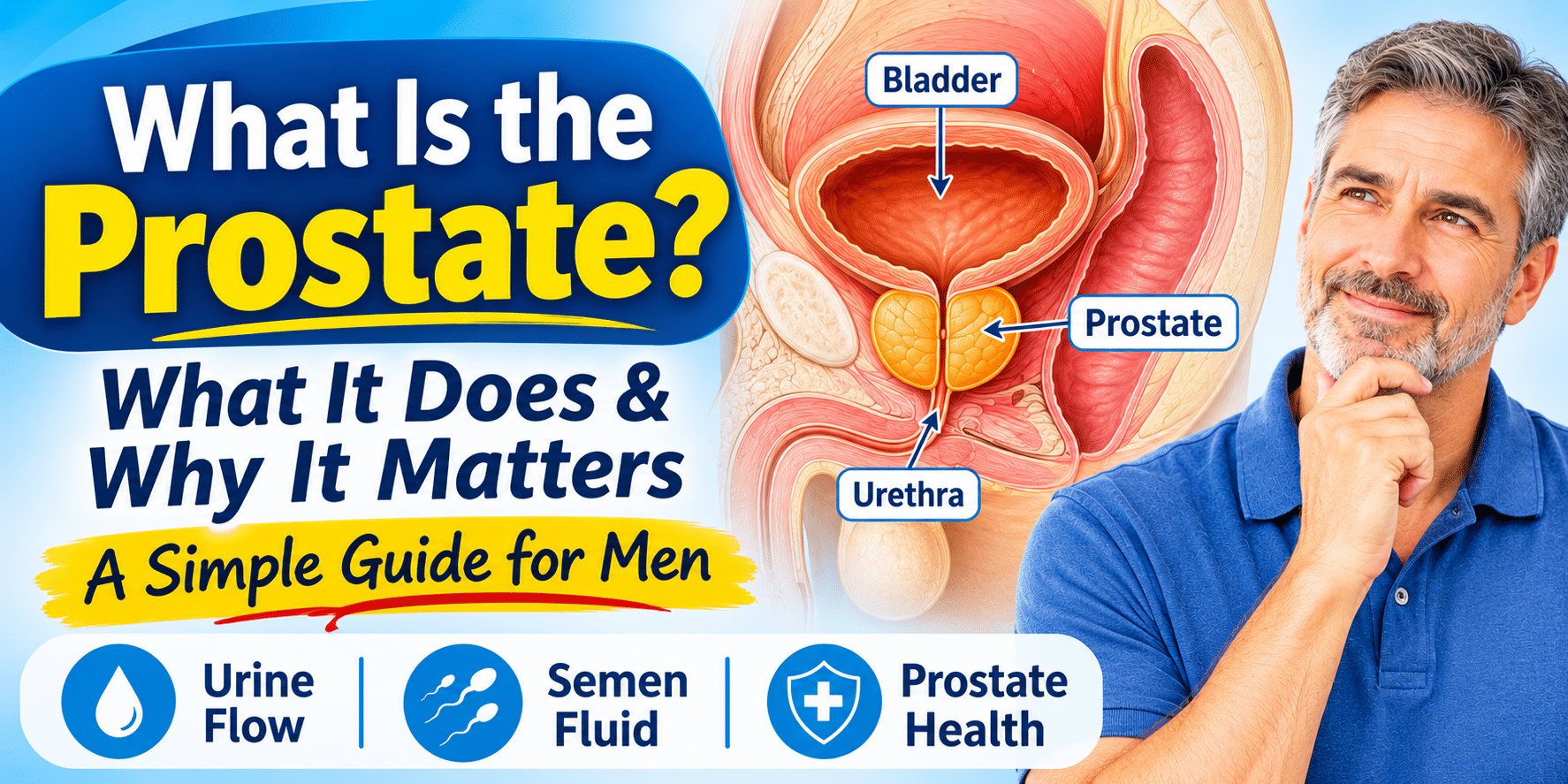
The prostate is a small gland about the size of a walnut. It’s part of the male reproductive system, and only men (and people assigned male at birth) have one.
It weighs roughly an ounce in a young adult. That’s tiny, which is exactly why a little swelling can cause such noticeable problems.
Where Is the Prostate Located?
The prostate sits just below the bladder and in front of the rectum. The urethra, the tube that carries urine out of the body, runs straight through the middle of it.
Picture a donut with the urethra as the hole. When the donut gets bigger, the hole gets squeezed. That one bit of anatomy explains most prostate-related urinary symptoms.
Because the gland sits right against the rectum, doctors can feel the back surface of it during a digital rectal exam (DRE).
👉 [Explore This Prostate Support Formula]
What Does the Prostate Do?
The prostate has two main jobs, and both are tied to reproduction and urination.
1. It Makes Fluid for Semen
The prostate produces a thin, milky fluid that makes up a good share of semen, commonly estimated at around 30 percent. This fluid feeds sperm and helps protect them, and it contains substances such as zinc, citric acid and an enzyme called prostate-specific antigen (PSA).
PSA also helps keep semen liquid after ejaculation, so sperm can swim more freely. Doctors measure PSA in the blood as one clue about prostate health, which is why you’ll hear about “PSA tests” later in life.
2. It Helps Control the Flow of Urine and Semen
During ejaculation, muscle tissue in and around the prostate squeezes the fluid out. At the same time, the opening to the bladder closes so semen goes out the right way and not backward. The prostate acts like a traffic controller for both urine and semen.
How the Prostate Changes With Age
The prostate grows during puberty, driven by male hormones like testosterone and its more potent form, DHT (dihydrotestosterone). Then it more or less holds steady in size until around age 25 to 30.
After that, many men see slow growth that continues for life. It’s normal, and it’s why prostate problems are so common in older men.
According to the National Institute of Diabetes and Digestive and Kidney Diseases (NIDDK), about half of men between 51 and 60 have some form of an enlarged prostate, and the number climbs to as many as 90 percent of men over 80. So if you’re noticing changes, you’re far from alone.
👉 [Discover This Prostate Supplement]
Common Prostate Problems Every Man Should Know About
Three conditions cover most prostate trouble. They can feel similar at first, but they’re different problems.
| Condition | What It Is | Who It Affects Most |
| Enlarged prostate (BPH) | Non-cancerous growth that squeezes the urethra | Men over 50 |
| Prostatitis | Inflammation or infection of the prostate | Men of any age, often under 50 |
| Prostate cancer | Abnormal cell growth in the gland | Mostly men over 50, higher risk with family history |
Enlarged Prostate (BPH)
Benign prostatic hyperplasia is the most common prostate issue. “Benign” means it isn’t cancer, but it can still make life uncomfortable. Common signs include a weak urine stream, trouble starting, dribbling at the end, a feeling that the bladder never fully empties, and getting up several times at night to pee.
Prostatitis
Prostatitis is swelling or infection of the gland. It can cause pain in the pelvis or lower back, pain while urinating, and sometimes fever or chills when it’s bacterial. According to the Urology Care Foundation, it’s one of the most common urinary tract problems in men younger than 50.
Prostate Cancer
Prostate cancer is the second most common cancer in American men after skin cancer. The American Cancer Society says about 1 in 8 men will be diagnosed in his lifetime. Early prostate cancer often has no symptoms at all, which is the whole reason screening conversations matter. The encouraging part is that most cases are found while the cancer is still in the prostate, and the survival rate at that stage is very high.
👉 [Check Out This Prostate Health Formula]
Symptoms That Are Worth Mentioning to Your Doctor
Don’t wait for something dramatic. See a doctor if you notice any of these:
- Frequent urge to urinate, especially at night
- A weak, slow or interrupted stream
- Pain or burning when you urinate
- Blood in your urine or semen
- Pain in the pelvis, lower back or hips that doesn’t go away
- Pain during ejaculation
Many of these turn out to be BPH or an infection and not cancer. Still, only a proper exam can tell the difference, so guessing doesn’t help.
When Should Men Start Thinking About Prostate Screening?
There’s no one-size-fits-all answer, and experts do disagree a bit. The American Cancer Society suggests men talk with their doctor about screening at age 50 if they’re at average risk. That moves to 45 for higher-risk men, including Black men and those with a father or brother diagnosed before age 65. The US Preventive Services Task Force recommends individual decision-making for men aged 55 to 69.
The reason for all the hedging is that PSA screening can find dangerous cancers early, but it can also flag slow-growing ones that would never have caused harm, which may lead to unnecessary treatment. A good doctor will walk you through both sides.
Simple Habits That Support Prostate Health
No food or supplement is a magic shield. But research does suggest that everyday habits matter.
- Stay active. Studies have linked regular exercise to a lower risk of urinary symptoms from BPH.
- Keep a healthy weight. Excess belly fat is associated with a larger prostate and more urinary symptoms.
- Eat more plants and fish. Diets rich in vegetables, tomatoes, and omega-3 fats are often linked to better prostate outcomes, though the evidence isn’t perfect.
- Limit late-night fluids and caffeine if nighttime bathroom trips are a problem.
- Don’t skip checkups after 50, or earlier if your family history says so.
If you’re thinking about supplements like saw palmetto, remember that the research is mixed, and a large trial published in the New England Journal of Medicine found it didn’t do better than placebo for urinary symptoms. Talk to your doctor before starting anything, especially if you take other medications.
Frequently Asked Questions
Can women have a prostate?
Not a true prostate, but women do have small glands (the Skene’s glands) that are sometimes described as similar in function.
Does an enlarged prostate mean cancer?
No. BPH and prostate cancer are separate conditions, and having one doesn’t mean you have the other. They can exist at the same time, though, which is why symptoms deserve a check.
Does ejaculating more often help the prostate?
Some studies, including a large Harvard-based study of health professionals, found a link between frequent ejaculation and lower prostate cancer risk. It’s interesting, but it doesn’t prove cause and effect, so don’t treat it as medical advice.
The Bottom Line
The prostate is a small gland with a big job. It makes the fluid that nourishes sperm, helps direct urine and semen, and tends to grow as you get older. That growth is usually harmless, but it can cause real trouble with urination or, less often, signal something more serious.
Know your family history, pay attention to changes, and bring it up with your doctor early instead of late. A short conversation now is a lot easier than a bigger problem later.
This article is for general information only and isn’t a substitute for professional medical advice. Please talk to a qualified healthcare provider about your own health.