The Memory Wave Reviews [2026]: Claims, Evidence, & Feedback
Last Updated On November 15, 2026 by Robert Dowling
✅Fact Checked by Karen | 🩺 Medically Reviewed by Dr. Bruce | ⓘ Affiliate Disclosure
We independently research and review products with medical accuracy verified by our professionals. We may earn some commission when you purchase through our links (no extra cost to you). Learn how we do product review.
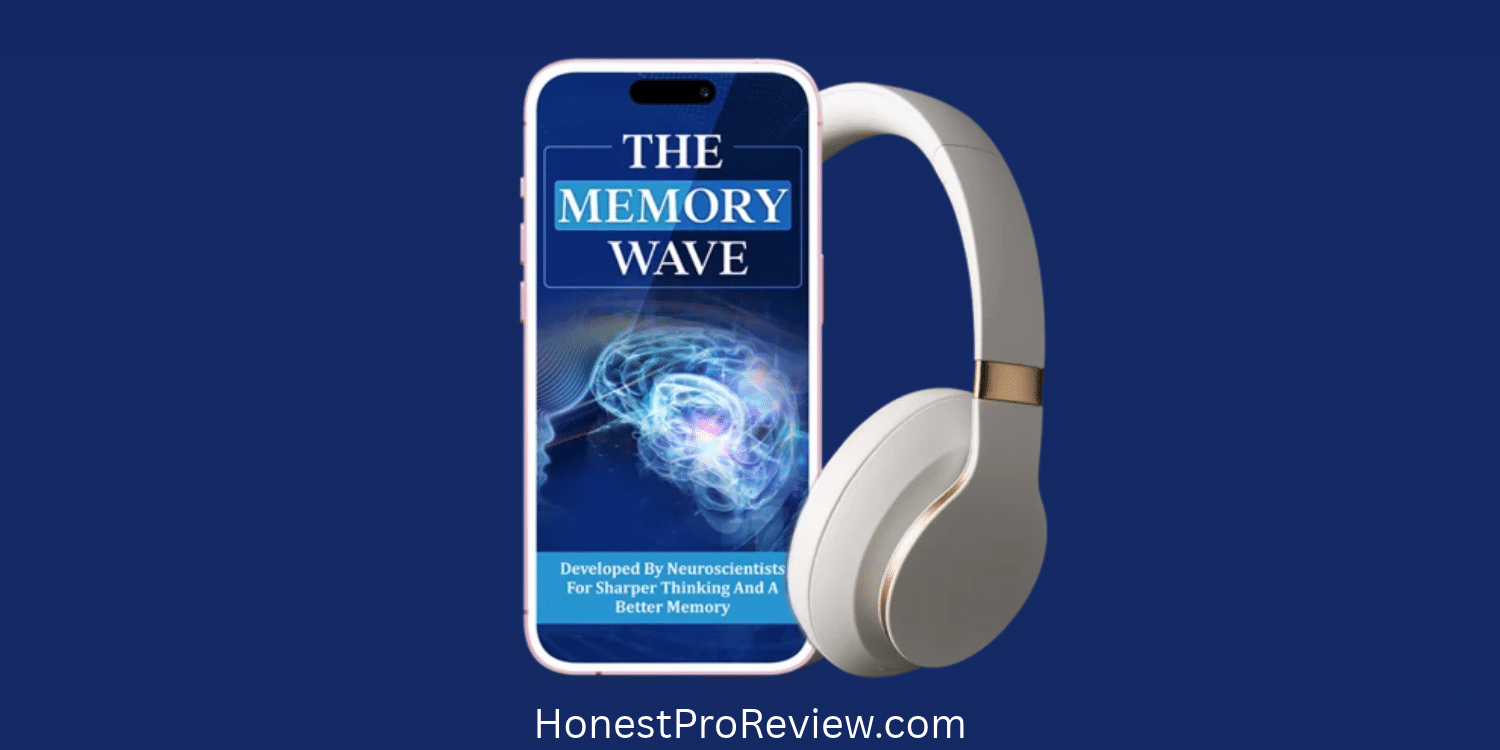
Ever stand in the kitchen, mid-sentence, and lose the thought completely? It happens to most of us, and it nudges plenty of people toward quick fixes. One of the more heavily advertised is The Memory Wave, a short daily audio session said to support memory, focus, and mental clarity. This The Memory Wave review looks at what you’re buying, who stands behind it, how the science holds up, what buyers report, and whether the $39 price feels fair.
Honest Pro Review Scorecard
The Memory Wave Reviews
Rating Breakdown
What Users Say
Users reported easy using and improvement in memory recall and cognition.
Our Findings
The program looks effective as it follows scientific researches.
Verdict The Memory Wave is a legit memory boosting program.
How we rate: Each category is scored out of 5 by our editorial team from ingredient research, published evidence and user feedback. The final rating is the average of the five scores.
The Memory Wave Specifications
| Features | Details |
|---|---|
| Product Name | The Memory Wave |
| Manufacturer | Dr. James Rivers |
| Product Type | Digital Program |
| What’s Inside | DVD and eBooks |
| Price | $39 |
| Money Back Guarantee | 90 days |
| Customer Support | sales@discovermemorywave.com |
| Availability | Official website |
What Is The Memory Wave?
It’s a digital audio program. The sellers describe a roughly 12-minute track you listen to daily, with no pills, no app, and nothing shipped to your door. It’s sold through ClickBank, and you download the file to a phone or computer and play it through headphones. Some affiliate pages say 17 minutes, but the seller-side material points to 12, so that’s the figure I’m using.
Who Created It, and Is the Creator Credible?
This is where things get murky. Promotional pages for the program have presented a neuroscientist named “Dr. James Rivers,” described variously as NASA-trained or MIT-trained. One investigation reports that the marketing includes a disclosure saying the expert’s credentials are genuine and the name protects privacy. Other reviewers say they couldn’t find any independent record of that person, and I couldn’t either.
Verifiable: a real audio product, a ClickBank checkout, a listed Delaware business address, and a support email.
Only claimed: the creator’s background, the research team, the “thousands of users,” and any institution linked to the pitch. A logo or a name doesn’t show that any lab tested this track.
Worth noting too: the more aggressive ads reportedly promote an “eight-second ear trick,” which doesn’t match a 12-minute daily routine.
Click here to get The Memory Wave from the official website
What’s Included and How the Program Works
The core is the audio track. The seller also lists bonus materials, though affiliates describe them inconsistently, so check what’s on the order page. Equipment-wise, you need headphones and a quiet spot.
Here’s an illustrative day. After breakfast you sit down, put on headphones, close your eyes, and press play. Twelve minutes later you’re done. You jot a quick note on how focused you felt, then carry on. That’s the whole routine.
How Does The Memory Wave Work?
The pitch rests on brainwave entrainment: the idea that your brain’s electrical rhythms can drift toward rhythmic sound. The seller aims for gamma frequencies, loosely tied to memory and attention.
- You play the track daily through headphones.
- The audio presents rhythmic sound patterns aimed at gamma activity.
- Over repeated sessions, this is claimed to support attention and recall.
- Consistency is the lever, since the effect is described as cumulative.
The Science: Claims vs. Evidence
| Claim | Evidence | My assessment |
|---|---|---|
| Gamma-frequency stimulation supports memory | 40 Hz stimulation is well studied in mice. A small human pilot (15 people with mild Alzheimer’s) used 40 Hz light and sound for an hour daily over three months. | Promising lab science, but a different stimulus, population and dose than a 12-minute audio file |
| Audio entrainment can help memory and attention | A 2019 meta-analysis of 22 studies found a medium average effect for binaural beats. A 2023 review found mixed results depending on frequency and task. | Best support available. The sellers don’t confirm which technique this track uses |
| The track “reverses” memory loss or clears a “brain invader” | I found no published trial of this product | Unsupported |
| Works for older adults specifically | Nothing tested on this track | Unverified |
Potential Benefits (and Realistic Expectations)
Plausible: feeling calmer or more focused during and after a quiet daily session. The wider auditory-beat research hints at modest attention and anxiety effects, and a consistent routine helps on its own. Unproven: any real improvement in memory, and certainly any effect on age-related decline.
On timing, there’s no solid benchmark. If it does anything for you, a couple of weeks of daily use is a fair window to notice it. Use the refund period as your test period.
Click here to get The Memory Wave from the official website
Tips for Getting the Most Out of It
- Use comfortable headphones at a low-to-moderate volume in a quiet place.
- Pick a fixed time of day so you actually stick with it.
- Track one simple thing: a 1 to 5 rating of focus and mood each day, plus any memory slips you notice. Compare week one to week four.
- Don’t change caffeine, sleep, or other habits at the same time, or you won’t know what helped.
- Stop if you get headaches, dizziness, ear discomfort, or unusual anxiety.
- Put your refund deadline in your calendar the day you buy.
Pros and Cons
Safety, Risks and Who Should Talk to a Doctor First
For most healthy adults, a calm audio track at sensible volume is unlikely to cause serious harm, and I found no credible reports of that. “Low-risk” still isn’t “risk-free,” and this specific track hasn’t been studied.
- Headaches or ear fatigue from long or loud listening
- Dizziness or an odd sensation with headphones
- Restlessness or increased anxiety in some people
- Seizure risk: anyone with epilepsy should ask a doctor before trying brainwave-entrainment audio
- Worsening or sudden memory problems, which need a medical evaluation, not an audio file
The Memory Wave Customer Reviews and Complaints
The Memory Wave reviews are mixed but lean positive. People like how easy it is, since it’s a 12-minute listening session once a day, and many say they feel sharper and more alert after a few weeks. Others say results came slowly, and some doubt the science behind it or expected faster improvements.
Positive Reviews
Robert M., Texas: “After about a month of daily listening, I felt noticeably sharper at work and found it easier to stay focused during long tasks.”
Jennifer L., Florida: “I was skeptical at first, but The Memory Wave helped reduce my mental fog and improved my concentration throughout the day.”
Michael S., California: “The program is easy to use, and I’ve noticed better recall of small details and appointments since I started listening regularly.”
Common Complaints
Karen T., Illinois: “I didn’t notice much during the first few weeks, so patience is definitely required if you want to see any benefits.”
David R., New York: “The audio is relaxing, but I expected stronger results based on the advertising claims.”
Patricia W., Ohio: “It’s a decent program, but I’m still not convinced the improvements were significant enough to justify the purchase.”
Overall Sentiments
Sentiment is cautiously positive. People who stick with it daily often mention better focus and mental clarity. The complaints are about slow results, doubts over the science, and hopes for dramatic improvements that didn’t come. Most reviews suggest it works better as a wellness habit than as a guaranteed memory fix.
Click here to get The Memory Wave at the discounted price
The Memory Wave Scam or Legit?
It isn’t a vanishing-payment scam: you get a working audio file from an established retailer with a refund policy. The weakness is the marketing, which stretches thin evidence and leans on an expert nobody can verify.
My verdict: A legitimate purchase with unproven benefits, so judge it only by how you feel and whether you use the guarantee.
Who It’s For, and Who Should Skip It
Good fit
- Curious, healthy adults who like low-cost experiments
- People who already enjoy meditation or focus audio
- Buyers disciplined enough to request a refund if needed
Skip it if
- You’re hoping to treat or reverse memory loss
- You have epilepsy or a seizure history, unless your doctor approves
- Unverified creator credentials are a dealbreaker
- You dislike upsell-heavy checkouts
The Memory Wave Price

The program is advertised at a one-time $39, and promotional pages show a much higher “regular” price. Take that crossed-out number with a grain of salt. Expect possible upsell offers at checkout.
Refund Policy
The seller advertises a 90-day money-back guarantee; terms apply. A few third-party pages say 60 days, so read the terms on the order page and keep your proof of purchase.
Where to Buy The Memory Wave
Buy only from the official site, discovermemorywave.com, which processes payment through ClickBank. Be careful with look-alike domains, since several copycat pages exist.
Concluding Remark
The Memory Wave is a brainwave-style audio program built around a simple 12-minute daily routine, and it may help support focus, memory, and mental clarity. Results vary, and the evidence for the finished product is limited. Still, it’s affordable, easy to fit into a day, and backed by a 90-day money-back guarantee, which makes it a low-risk thing to try if you want a non-invasive option.
Best for: Adults dealing with brain fog, reduced focus, or age-related memory worries.
Avoid if: You want guaranteed results or a medically proven treatment.
Verdict: A legitimate digital wellness program that’s worth a try for everyday mental performance support, as long as your expectations are realistic.
Buy The Memory Wave from the official website
The Memory Wave FAQs
Is it safe for seniors?
Probably low-risk, but it hasn’t been tested in older adults. Check with a doctor first, particularly with seizure history or memory worries.
Does it help with memory loss or dementia?
There’s no evidence it does. Ongoing memory problems need a medical evaluation.
How long until results?
No reliable timeline exists. Give it a few weeks of daily use, inside the refund window.
Do I need special equipment?
Only headphones and a device to play the file. No physical gadget is involved.
Is The Memory Wave a scam?
No, but the creator claims are unverified and the benefits unproven.
Disclaimer: The information provided in the content is just for informational purposes and should not be taken as medical advice or a recommendation. Always consult your physician if you have existing health issues, pregnant, breastfeeding, or taking any prescribed medication. Medical Disclaimer