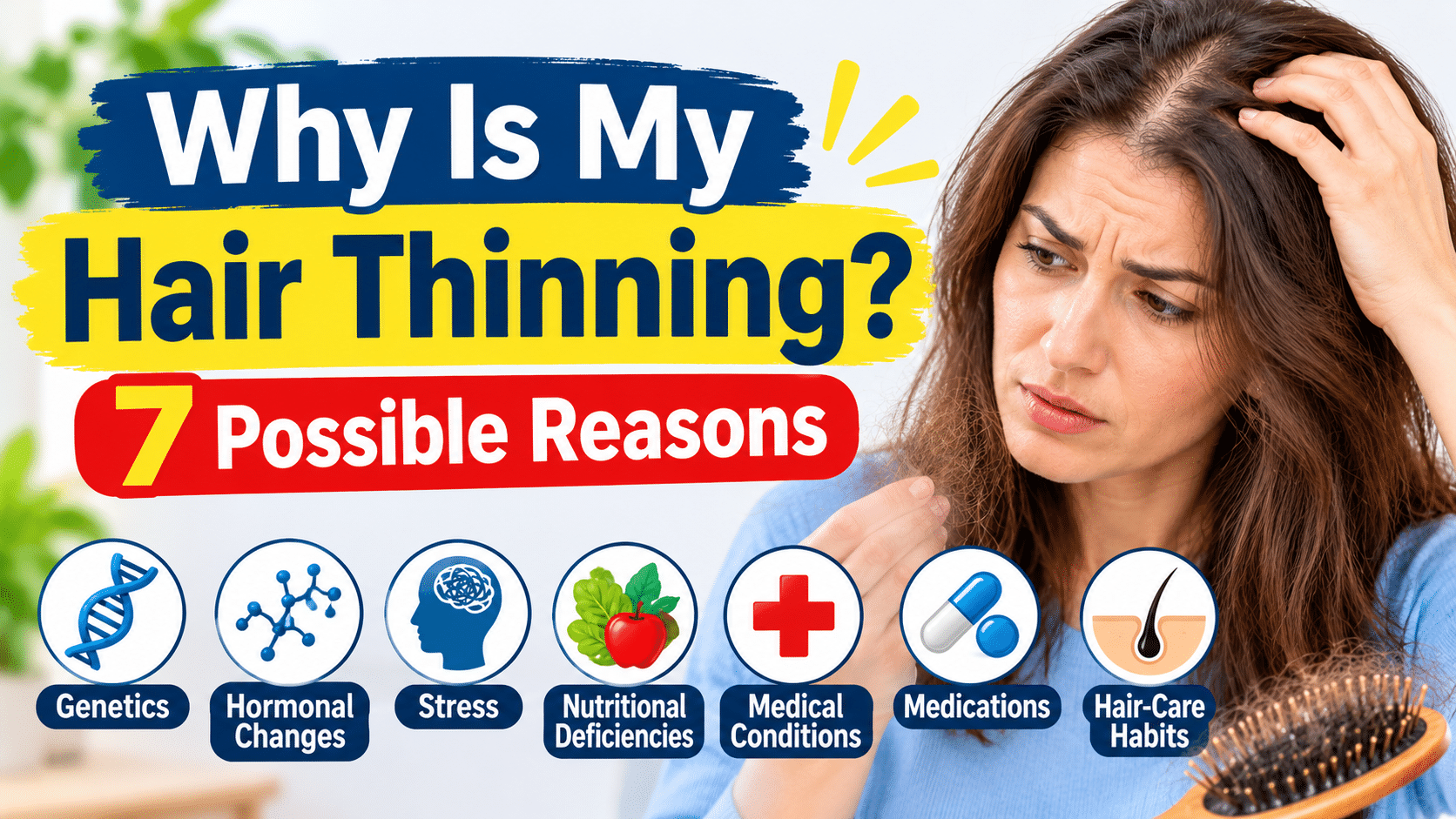
Why Is My Hair Thinning? 7 Possible Reasons
Last Updated On November 17, 2026 by Robert Dowling
You notice it in the shower drain first. Or maybe your ponytail feels thinner, or the part in your hair looks a little wider under bathroom lighting. Either way, the question lands fast: why is my hair thinning?
Here’s the short answer. Hair thinning almost never has a single cause, and most causes are more fixable than people fear. Below are seven of the most common reasons, how to recognize each one, and when it’s time to stop guessing and see a doctor.
One quick reality check before we start. Losing 50 to 100 hairs a day is normal, according to the American Academy of Dermatology. Thinning is something else: more hairs falling out than growing back, or strands getting finer over time.
1. Genetics (Androgenetic Alopecia)
This is the big one. Pattern hair loss, known as male-pattern or female-pattern baldness, is the most common cause of hair thinning worldwide. By age 50, roughly half of men and around 40% of women show some degree of it.
It works through sensitivity to DHT, a byproduct of testosterone. In people who are genetically prone, DHT gradually shrinks hair follicles. Each new hair comes in thinner and shorter until the follicle stops producing visible hair altogether.
What it looks like: In men, a receding hairline and thinning crown. In women, a widening part and less volume overall, usually without a receding front hairline.
2. Stress and Sudden Shedding (Telogen Effluvium)
If your hair suddenly seems to be coming out in handfuls, this is a prime suspect. Telogen effluvium happens when a major physical or emotional stressor pushes a large number of hairs into the resting phase at the same time.
The odd part is the delay. Shedding typically starts two to three months after the trigger, so people often don’t connect the dots. Surgery, high fever, crash dieting, a death in the family, even a bad bout of the flu can do it.
Dermatologists saw a wave of this after COVID-19, and several studies of recovered patients reported noticeable diffuse shedding a few months post-infection. The good news: it’s usually temporary. Most people see regrowth within six to nine months once the trigger passes.
3. Nutrient Gaps
Hair is metabolically expensive to grow. When your body is short on fuel, it quietly deprioritizes it.
The usual suspects:
- Iron: Low ferritin (your iron stores) is linked to hair shedding, especially in women with heavy periods. Research on this is mixed on exactly what level matters, but many dermatologists check it routinely.
- Vitamin D: Plays a role in follicle cycling, and low levels turn up often in people with hair loss.
- Protein: Hair is mostly keratin, a protein. Very low-calorie or restrictive diets can trigger shedding.
- Zinc and B vitamins: Deficiencies are less common, but they matter when present.
A caution here. Supplements aren’t a magic fix. Taking extra iron or biotin when you aren’t deficient won’t thicken your hair, and too much of certain nutrients (selenium and vitamin A, for example) can actually cause hair loss. Get tested first.
4. Hormonal Shifts
Hormones steer the hair growth cycle, so changes in them show up on your scalp.
- Postpartum: Pregnancy keeps more hairs in the growth phase. After delivery, they all catch up and shed at once, usually around three to four months later. It’s dramatic but normal.
- Menopause: Falling estrogen lets androgens have more influence, which can thin hair on the top of the scalp.
- PCOS: Polycystic ovary syndrome raises androgen levels and often comes with thinning on top, plus unwanted hair elsewhere.
- Birth control changes: Starting or stopping some pills can cause temporary shedding.
5. Thyroid and Autoimmune Conditions
Your thyroid sets the pace for much of your body’s metabolism, including hair growth. Both an underactive and an overactive thyroid can cause diffuse thinning, and it’s a surprisingly common hidden reason. A simple blood test (TSH) can rule it out.
Then there’s alopecia areata, an autoimmune condition where the immune system attacks hair follicles. It usually shows up as smooth, round bald patches rather than overall thinning. Around 2% of people will develop it at some point in their lives. Scalp conditions like severe dandruff, psoriasis, or fungal infections can also interfere with healthy growth.
6. Medications and Medical Treatments
Check your medicine cabinet. Hair loss is a listed side effect of many drugs, including:
- Certain blood thinners
- Some antidepressants and mood stabilizers
- Beta-blockers and other blood pressure medications
- Retinoid-type acne drugs
- Chemotherapy (the best-known cause, though it’s a separate and more dramatic type of shedding)
Don’t stop a prescribed medication on your own. Talk to your doctor, who may be able to adjust the dose or switch you to an alternative.
7. Tight Styles, Heat, and Harsh Treatments
Sometimes the cause is what we do to our hair. Traction alopecia comes from constant pulling: tight ponytails, braids, weaves, or extensions. A 2016 review in the Journal of the American Academy of Dermatology estimated it affects around a third of women of African descent, largely due to styling practices, though it can affect anyone who wears tight styles regularly.
Frequent bleaching, relaxers, and high-heat tools mostly cause breakage rather than true thinning at the root. Still, the result looks similar: thinner, shorter, more fragile hair. If you catch traction early, hair often grows back. Left too long, follicles can scar permanently.
How to Narrow Down Your Cause
| Pattern you notice | Likely culprit |
| Slow thinning at the crown or part, runs in the family | Genetics |
| Sudden heavy shedding 2–3 months after illness or stress | Telogen effluvium |
| Shedding after childbirth | Postpartum hormones |
| Thinning plus fatigue, weight changes, or feeling cold | Possible thyroid issue |
| Smooth bald patches | Alopecia areata |
| Thinning along hairline or temples with tight styles | Traction alopecia |
This table is a starting point, not a diagnosis. Overlap is common. Someone can have genetic thinning and low iron at the same time.
When to See a Doctor
Book an appointment with a GP or dermatologist if:
- Shedding lasts more than three months
- You have bald patches, a burning or painful scalp, or redness
- Thinning comes with fatigue, irregular periods, or unexplained weight changes
- You’re a woman noticing a fast change in the part line
Expect blood tests (ferritin, thyroid, vitamin D) and a scalp exam. Early diagnosis matters, particularly for pattern hair loss, because treatments protect existing follicles better than they revive dead ones.
What Actually Helps
Treatment depends on the cause. Fixing a deficiency or waiting out telogen effluvium is very different from managing genetic thinning.
For pattern hair loss, topical minoxidil is the one over-the-counter treatment with solid evidence behind it, and prescription finasteride is effective for men. Neither works overnight. Expect at least four to six months before judging results, and know that stopping usually means losing the gains. Things like rosemary oil and laser caps have some early research, but the evidence is thinner.
The Bottom Line
Hair thinning is usually your body sending a signal, not a verdict. Sometimes the signal is as simple as a tight ponytail or a rough few months. Other times it points to something worth testing, like iron or thyroid levels. Pay attention to the pattern, give it a few weeks of observation, and get checked early if something feels off. The sooner you know the cause, the more options you’ll have.
Looking for Extra Hair Support?
If you’re concerned about thinning hair, you may want to explore this hair support product. Check its ingredients, benefits, and customer reviews to see if it’s right for you.
This article is for general information and isn’t a substitute for medical advice.