
Neuro-Balance Therapy Reviews [2026]: Does It Really Work?
Last Updated On October 12, 2026 by Robert Dowling
✅Fact Checked by Karen | 🩺 Medically Reviewed by Dr. Bruce | ⓘ Affiliate Disclosure
We independently research and review products with medical accuracy verified by our professionals. We may earn some commission when you purchase through our links (no extra cost to you). Learn how we do product review.
Have you been worrying about poor balance, unexpected dizziness, or the fear of falling as you get older and wondering whether Neuro Balance Therapy can actually help?
In this detailed article, we’ll take an objective look at various Neuro-Balance Therapy reviews, what the program is, how it claims to work, what’s included, its pros and cons, pricing, and whether it’s a worthwhile option for people looking to improve stability, mobility, and confidence in their daily lives.
Rather than relying on marketing claims alone, we’ll examine the available information so you can make a more informed decision about whether Neuro Balance Therapy is right for you.
What Is Neuro-Balance Therapy?
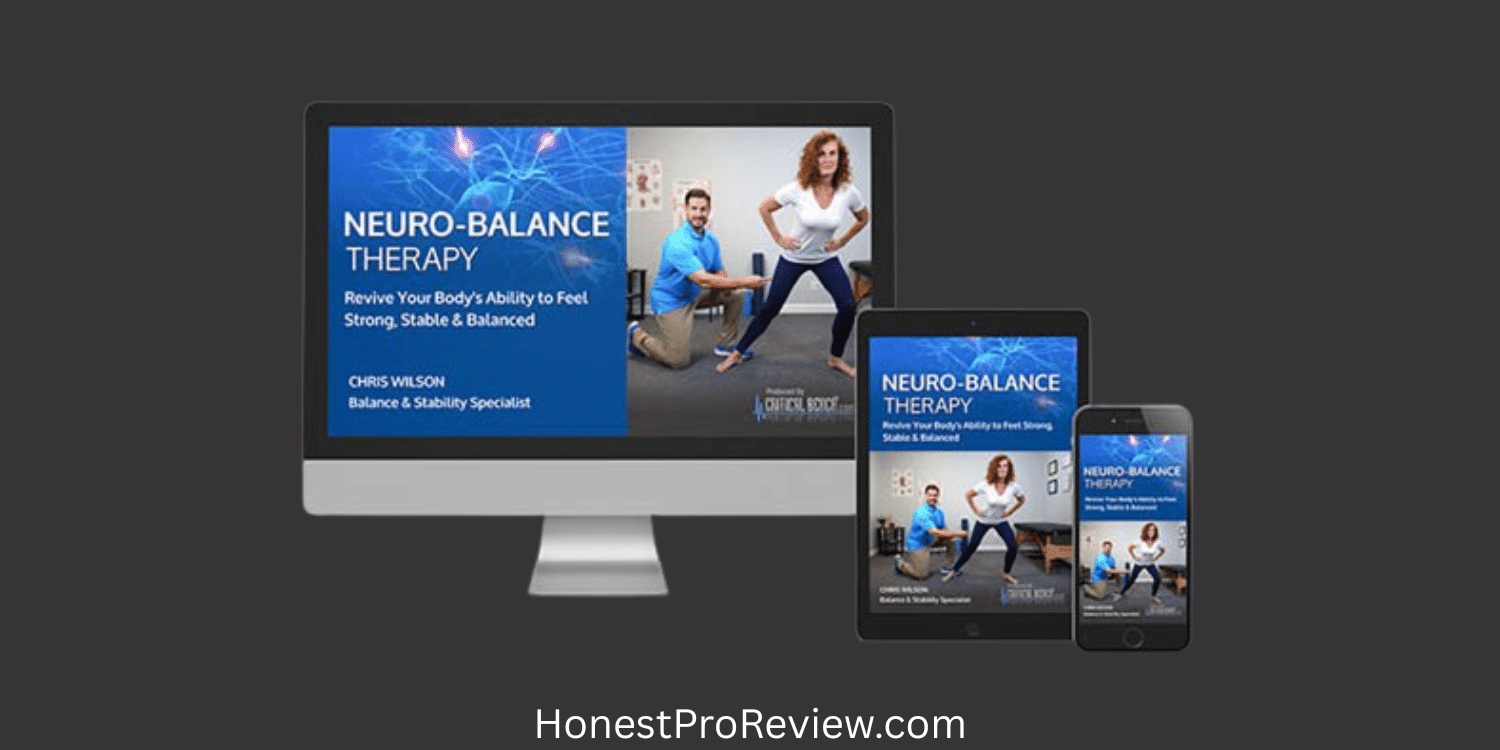
Neuro-Balance Therapy is a home-based program aimed at people who feel unsteady on their feet, especially older adults worried about tripping or falling. It is sold as a set of guided exercise videos and written guidance, and the physical version also includes a spiked ball.
The central idea in the marketing is that poor balance can be linked to reduced activity in the deep peroneal nerve, a nerve that runs through the lower leg and foot. The program says that stimulating this nerve with its exercises and the spiked ball helps improve coordination and stability.
One point of confusion is worth clearing up. Some reviews describe it as purely digital, while others describe a DVD and a physical ball. Which one you get depends on the package you choose, so check what is in your cart before paying.
Who Created Neuro-Balance Therapy?
The program is credited to Chris Wilson, who is described in promotional material and in several reviews as a certified balance specialist with more than 11,000 hours of hands-on experience working with older adults.
Those are the creator’s own claims, and we could not independently confirm the certification or the hours. Several testimonials featured on third-party review pages come from people who say they trained with him personally. That shows he has a following, but it is not independent evidence that the program works.
✅ For More Details Visit official website
What’s Included in the Program?
According to the Neuro-Balance Therapy reviews we read, the full package includes:
- Guided exercise videos (DVD and/or digital download)
- A written manual or quick-start guide
- A spiked ball used on the sole of the foot
- A bonus guide called Top 20 Tips to Fall-Proof Your Home
The program describes a routine built from very short movements (around 10 seconds each) done for a few minutes a day. Reported examples include rolling the spiked ball under the foot and simple standing balance work, such as standing on one leg.
How Does Neuro-Balance Therapy Work?
The program’s core idea is that balance isn’t only about strong muscles. It also depends on how well your brain, nerves, and lower body talk to each other. Per the program, you work on that with simple at-home exercises and sensory stimulation techniques.
It runs in roughly four stages:
Waking up the balance nerves. The early focus is on the feet and lower legs, with the aim of sharpening the feedback your brain gets when you stand, walk, or turn.
Body awareness. Done daily, the exercises are meant to tighten the link between your nervous system and the muscles that handle posture.
Everyday stability. Better coordination could make stairs, uneven surfaces, and household chores feel less risky.
Long-term mobility. The program leans on consistent practice rather than fast results, with the aim of keeping you mobile and less afraid of falling.
The Science: Claims vs. Evidence
This is where we think readers deserve the most clarity. Promotional pages cite real research, but the research does not always say what the marketing implies.
| Official claims | What the research shows | Our assessment |
|---|---|---|
| Falls are a major risk for older adults | Well established. Public health agencies such as the CDC and the National Institute on Aging describe falls as a leading cause of injury in older adults and often cite that roughly one in four people over 65 falls each year. | Supported |
| Balance and strength exercises can reduce fall risk | Broadly supported. Structured exercise programs that include balance training are widely recommended for fall prevention. | Supported |
| Stimulating the peroneal nerve improves balance. | Studies on peroneal nerve stimulation mostly involve electrical devices used for conditions such as foot drop or nerve pain, not a spiked ball. | Not directly supported |
| The spiked ball “revives” or “reactivates” nerves | We found no clinical trials testing this specific tool for that purpose. | Unproven |
| It treats balance disorders, dizziness, or vertigo | Those conditions have varied causes (inner ear, neurological, circulatory, or medication-related) that need a proper diagnosis. | Not supported |
| Results in about 14 days | Presented as the typical timeline in sales material. We found no published data behind it. | Unverified |
In plain terms, gentle balance practice is a sensible idea, and doing something regularly may well help you feel steadier. But the specific explanation about nerve activation goes further than the available evidence.
Any improvement users report could come from regular practice, increased attention to movement, or simply being more careful, rather than from the spiked ball itself. Without a controlled study, there is no way to tell.
✅ For More Details Visit official website
Potential Benefits and Realistic Expectations
Based on the program design and user feedback, the plausible benefits include:
- A structured habit. Short sessions are easy to stick with, and consistency matters for any balance training.
- More confidence. Several users describe feeling less hesitant on stairs or uneven ground. Confidence matters, since fear of falling can lead people to move less, which can make balance worse.
- Better awareness of the feet. Foot stimulation and slow standing exercises may improve how aware you are of your footing.
- Fall-proofing the home. The bonus guide covers practical changes such as lighting, clutter, and non-slip mats, which are well-supported fall-prevention measures.
Realistic timeline: the program suggests noticeable changes within a couple of weeks. Users in the Neuro-Balance Therapy reviews we read describe gradual changes over several weeks rather than anything dramatic. Treat anything faster as the exception, not the rule.
Safety and Risk Factors
One reviewer states that there are no reported side effects. We would not go that far. Any balance exercise carries some risk of a stumble, and the program asks people who are already unsteady to stand on one leg.
Check with a doctor or physical therapist first if you:
- Have neuropathy (for example, from diabetes), spinal stenosis, Parkinson’s disease, a history of stroke, or another neurological condition
- Have had a recent fall or fracture
- Experience frequent dizziness, vertigo, fainting, or sudden changes in balance (these can signal something that needs urgent attention)
- Have foot wounds, severe foot pain, or reduced sensation in your feet (rolling a spiked ball on the sole may not be appropriate)
- Take medication that can affect balance or blood pressure
Practical safety tips: do the standing exercises next to a sturdy counter or wall, wear non-slip footwear or use a mat, start slowly, and stop if anything hurts or makes you dizzy.
Who Should Buy Neuro-Balance Therapy
- Feel mildly unsteady and want a gentle, home-based routine
- Prefer short daily sessions to a gym or clinic
- Want a low-cost option with a refund policy
- Have your doctor’s go-ahead
Who Should Avoid Neuro-Balance Therapy
- Have a diagnosed neurological or inner-ear condition (a tailored plan from a professional is a better starting point)
- Need in-person coaching or hands-on correction
- Expect it to “cure” nerve damage or dizziness
- Have foot conditions that make pressure on the sole unsafe
Pros and Cons
Our 90-Day Trial of Neuro-Balance Therapy
James is a 47-year-old accountant, and he didn’t expect much. He just wanted to feel less wobbly when he stood up too fast or walked over uneven ground, something he’d noticed more in his forties. He stuck with the program for three months and kept notes. Any change came slowly.
Days 1 to 30: Not much happened. He did become more aware of his posture, and everyday tasks felt a little steadier.
Days 31 to 60: Longer walks got easier. He hesitated less on stairs and rough ground.
Days 61 to 90: The gains were more consistent. By then he was spending less time thinking about his balance while going about his day.
Overall Results: James calls it a positive experience, though a gradual one. He doesn’t see it as a quick fix. What he did get was a steady bump in everyday confidence.
Tips for Getting the Most Out of It
- Set a fixed time each day, for example, after brushing your teeth.
- Keep a simple log. Note how long you can hold a standing position and how you feel on stairs each week.
- Combine it with home safety changes. Better lighting, clear walkways, and non-slip mats make a measurable difference.
- Keep your doctor in the loop, especially if your symptoms change.
- Stop and get advice if you feel new pain, numbness, or worsening dizziness.
Neuro-Balance Therapy Customer Reviews and Complaints
Across the Neuro-Balance Therapy reviews, one thing keeps coming up: people like how simple it is. Many say they feel steadier and more confident after sticking with the exercises. On the flip side, some say progress is slow and takes patience, and a few found the routines repetitive. Several said results depended on how consistent they were.
Positive Reviews
“I was nervous about walking outside after a fall last year. After following the program for a few weeks, I felt steadier on my feet and much more confident moving around the neighborhood.” – Linda M., Texas
“The exercises were simple enough for me to do at home, and I noticed less wobbling when getting up from a chair. It wasn’t instant, but the improvement was definitely there.” – Robert H., Florida
“I liked that the program didn’t require gym equipment or intense workouts. My balance feels better today than it did a few months ago.” – Susan W., Arizona
Common Complaints
“The exercises were easy to follow, but I expected faster results. It took nearly a month before I noticed a real difference.” – James P., Ohio
“Some of the concepts felt repetitive, and I think the program works best if you stick with it consistently. Missing sessions seemed to slow my progress.” – Karen D., California
“The program was helpful overall, but it wasn’t the dramatic transformation I was hoping for. I still need to be careful when walking on uneven surfaces.” – Michael T., Pennsylvania
Overall Sentiment
Overall, the feedback leans positive. Most complaints are about the time and consistency needed, not about the program itself. Worth noting that nobody is selling this as an overnight fix, so keep your expectations realistic.
✅ For More Details Visit official website
Comparing Neuro-Balance Therapy vs Neuro Energizer
Both programs talk about supporting the nervous system, but they go after different problems. Neuro-Balance Therapy is about balance, mobility and fall prevention, using simple physical exercises and nerve-activation techniques. Neuro Energizer is marketed as an audio program that uses sound frequencies and guided listening sessions to stimulate neurological pathways.
| Features | Neuro-Balance Therapy | Neuro Energizer |
|---|---|---|
| Focus | Balance, stability, mobility | Brain and nervous system stimulation |
| Format | Exercise-based training | Audio listening sessions |
| Goal | Lower fall risk, better coordination | Neurological function and mental performance |
| Physical Effort | Light daily exercises | None |
| Best for | People who feel unsteady or worry about falling | People who want a passive, brain-focused program |
| Style | Hands-on movement | Guided listening at home |
| Time | Daily practice recommended | Regular listening sessions |
| Known for | Balance and fall-prevention focus | Sound-frequency approach |
Which One Is Best For You?
If you’re mostly worried about losing your balance, feeling shaky on your feet, or taking a fall, Neuro-Balance Therapy is the more targeted pick. The whole program is built around coordination and stability, and you get there through movement.
Neuro Energizer is a different experience. It’s listening, not exercising, so it may appeal if you’d rather not do anything physical and you’re curious about a brain-focused, audio-based approach. Worth noting that it’s marketed toward a different goal altogether, so it isn’t really a swap for balance training.
Final Verdict
For balance problems, mobility concerns or a fear of falling, Neuro-Balance Therapy looks like the more practical choice. Neuro Energizer may suit people who want a passive wellness routine, but it’s aimed at something else. If stability is what you’re after, Neuro-Balance Therapy is the clearer fit.
Neuro-Balance Therapy Price

The program is usually a one-time $47 purchase, often shown as a discount off a higher “regular” price. That gets you the training materials, and there’s no monthly subscription, which is a plus.
Refund: There’s a 60-day money-back guarantee. It won’t guarantee results, but it takes some of the risk out of trying.
Where to Buy Neuro-Balance Therapy?
Only buy from the official website. Digital programs are easy to pirate or imitate, and the guarantee generally applies only to purchases made directly. Before buying, save a copy of the refund terms and note how to contact support. Check whether any upsells appear at checkout.
✅ For More Details Visit official website
Concluding Remark
Neuro-Balance Therapy is an inexpensive, easy-to-follow home routine that may help some people feel more stable and confident, mainly because it encourages regular balance practice. The weakest part of the offer is its scientific story. The idea that a spiked ball can “revive” the peroneal nerve is not backed by direct evidence, and a few of the broader claims about treating balance disorders should not be relied on.
Best for: Older adults who want to feel steadier moving around on their own.
Avoid if: You want instant results without a regular routine.
Verdict: A simple home balance program that may suit people focused on stability and fall prevention.
Frequently Asked Questions: Common FAQs
It is a real product with a refund policy, and we found no sign that it is a fraudulent offer. The more important question is whether it delivers what it promises. Its exercises are reasonable, but some claims are stronger than the evidence.
It is aimed at older adults and uses gentle movements, but any balance exercise carries some fall risk. Get medical clearance and do the exercises near something sturdy.
Some sources suggest it can. We found no evidence that it treats nerve damage. If you have neuropathy, ask your doctor before trying it.
The program points to around two weeks. Users commonly describe gradual changes over several weeks, and some notice little change.
The movements are simple enough that some can be done without it, but the ball is a core part of the program’s method.
Contact support within the guarantee window. Keep your order confirmation and note the date you started.
References
- Falls and Fall Prevention in Older Adults, StatPearls (NCBI Bookshelf): https://www.ncbi.nlm.nih.gov/books/NBK560761/
- An Update on Peroneal Nerve Entrapment and Neuropathy, Orthopedic Reviews: https://www.ncbi.nlm.nih.gov/pmc/articles/PMC8567814/
- Falls and Fractures in Older Adults: Causes and Prevention, National Institute on Aging: https://www.nia.nih.gov/health/falls-and-falls-prevention/falls-and-fractures-older-adults-causes-and-prevention
- Peripheral Nerve Stimulation for Lower Extremity Pain, Biomedicines: https://www.ncbi.nlm.nih.gov/pmc/articles/PMC9313008/
